

Part of the 15 for 15 Challenge Partner Spotlight Series
Recorded: Nov 24, 2025
As 15 Things Veterans Want You to Know marks 10 years of transforming understanding between Veterans and the communities that support them, PsychArmor is spotlighting partners who put this training into practice every day.
One of those partners is The Fire Watch, Florida’s leading community-based Veteran suicide prevention initiative. Their 10,000+ Watch Standers begin with cultural competency, and many start with 15 Things.
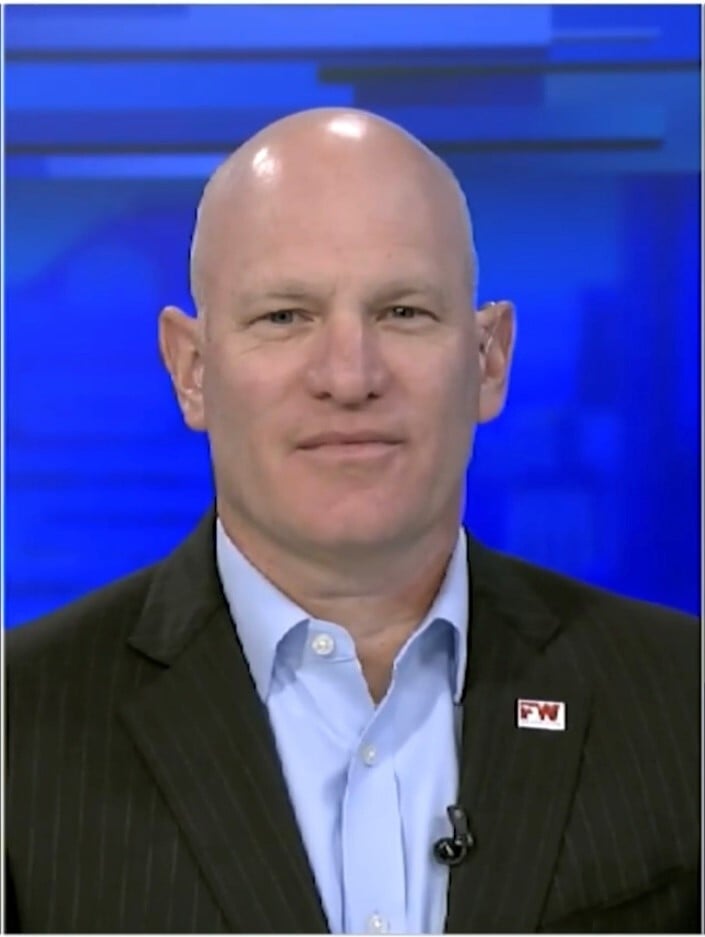
PsychArmor’s Jamie Regalia sat down with Executive Director Nick Howland to discuss the impact of the course, the power of culturally informed communities, and how partnerships like this strengthen support for Veterans and families statewide.
Where It Began: Why Fire Watch Was Created
What inspired you to co-found The Fire Watch, and how has your personal experience as a Veteran shaped the mission?
Nick Howland:
“Before I get to that, let me just say thanks for highlighting the fact that we hit a major milestone—10,000 Watch Standers—and PsychArmor has been with us every step of the way. We truly value that partnership. It’s been instrumental to our success.
We launched The Fire Watch at the end of 2019. A number of Veteran advocates and I in Northeast Florida got together and said, ‘We’re watching all this VA investment and private nonprofit investment in treatment as a way to end Veteran suicide—but not much in prevention.’
At the time, VA Secretary Robert Wilkie was also talking about how much money had gone into mental health treatment and treatment in general as a way to end Veteran suicide, but nothing had been invested upstream. The private medical community was already thinking about social determinants of health, but that upstream thinking wasn't yet fully embraced for Veteran suicide.
That led to the formation of an organization intended to end Veteran suicide by preventing it. When we whiteboarded our prevention programs, we used CPR as an inspiration. We figured if we could train community members to recognize the signs of Veterans in crisis, ask if they need help, and get them to the help quickly, we could prevent, and therefore end, Veteran suicide. basis of our whole programming
We reached out to PsychArmor in early 2020, soon after we launched, and brainstormed the idea with your team. Together, we developed the portal and launched in May 2020 with zero Watch Standers. With both online and in-person training, and support from the Florida Department of Veterans’ Affairs, we now train across the entire state. Just last month, we reached 10,000 trained community members who are standing vigilant and helping Veterans before they slip into crisis.”
What 10,000 Watch Standers Reveals About Florida’s Commitment
Fire Watch recently hit the major 10,000 Watch Standers milestone. What does that growth reveal about Florida’s commitment to preventing Veteran suicide?
Nick Howland:
“Florida is rapidly on its way to being the second-largest Veteran population in the country, and Florida cares about its Veterans. We like to consider ourselves the most military- and Veteran-friendly state, though California and Texas might take umbrage with that.
What's really cool is that I mentioned our growth from zero Watcher Standers to 10,000. When we hit about 2,000 Watch Standers about a year and half in, the Florida Department of Veterans’ Affairs reached out and said, ‘Let’s look together at the data, about where the Veteran suicides are, and we want to help you expand your program to the highest-risk places.’ We actually became the data repository for the state on Veteran suicides. We have all of that data on our website at thefirewatch.org and you can click on data.
We noticed that Northeast Florida, where we were already operating, the Tampa Bay, and Southeast Florida were the three highest-risk areas, followed by a growing risk in Escambia, the Panhandle, and the Florida Space Coast. With help and funding from FDVA, we expanded into the Tampa Bay area and the Southeast Florida area. And now with another round of state funding, we're growing in Space Florida and the Panhandle.
We expect that soon 60–70% of the state’s Veterans will be covered, and that our 10,000-person network will grow to 20,000 and then 30,000 in the next several years will be folks trained and ready to intervene. The Fire Watch operates now, because they were our inspiration, just like CPR. CPR's office, as part of the American Heart Association in Dallas, basically just exists to understand where the problem is and make sure they train as many people in the areas where there's a problem. They look at it not just geographically but by demographics – age, race, that kind of thing – and they try to figure out who's at most at risk of heart attack and stroke and train as many folks as they can in those areas and in those demographics on their CPR training. We're doing the same thing with The Fire Watch, looking closely at the data and then building our network where the risk is highest."
What Becoming a Watch Stander Means to Volunteers
From your conversations with volunteers, what does becoming a Watch Stander mean to them personally and emotionally?
Nick Howland:
“We like to say that taking the training, which is 30 to 45 minutes online or in person, is a way of doing something for our nation’s heroes besides just thanking them for their service.
And we get that a lot. If you actually look at our population of Watch Standers now, 10,000 of them, 70% are actually civilians who've never served. So when we go into a new area, say Tampa Bay in 2022 when we went into it, we would find that the early adopters were all Veterans and Veteran families and those with deep connections to the military and Veteran community. But over time, as the numbers grew, it would normalize to about 70% in that area who are civilians who've never served.
And what that means is that these are people who are taking the training, who care deeply about Veterans, who care deeply about the Veterans who've served our country and want to help. Taking the training is no small feat. Yeah, it's only 30 to 45 minutes. It's free. It's on our website at thefirewatch.org. But sometimes it can be emotional to take that kind of training, particularly if you've had a personal experience with suicide among family or friends. So, it's not a small ask where we're training people to be able to recognize those signs, to intervene, and ask those questions, and to know what resources there are to get Veterans to.
Interesting thing, is we do a survey of all of our Watch Standers. It was developed for us by the CDC when they took interest in our program two or three years ago. We asked all of our Watch Standers, have they engaged with a Veteran in the last quarter, [and id so] where? Work or home or an event? Have they referred that Veteran to a service, and where: a financial service or mental health or the VA or something like that? And what we find is that with 95% confidence, we know that each Watch Stander refers between 1.3 and 1.7 Veterans to services each year. That means our network of 10,000 Watch Standers will refer around 15,000 Veterans to services this year. Those services are potentially lifesaving; they're crisis or their upstream. So that's 15,000 Veterans getting help that they need due to our Watch Stander network. These are people in the community who care about Veterans and their families.”
Why 15 Things Veterans Want You to Know Is Core to Their Model
Fire Watch incorporates PsychArmor’s 15 Things Veterans Want You to Know into your model. What made this course the right fit?
Nick Howland:
“Well, we knew that when we launched this program, the whole core of it is that it takes the community to get involved. You know, about 7–8% of our nation have served, so that means 92% haven’t. So what we're trying to do is to engage the other 92% to help those, you know those 8% who have; that's why we have two paths to training if you go on our website. One is the Veteran or military path. The other is the civilian path and as I mentioned about 70% of our Watch Standers have entered through that civilian path. That civilian path needs military cultural affinity training, and that’s how we use the 15 Things Veterans Want You to Know. People love that video. It’s well done by PsychArmor and it gives people a real basis of knowledge in the military in a short time."
Jamie Regalia:
“So, was there a particular moment or story where you saw the message of 15 Things make a real difference?"
Nick Howland:
“All the time. One of the things we do and learned about, about a year into our training when we launched the Watcher Stander program, the players championship, which operates TPC Sawgrass golf tournament every year here in Northeast Florida, reached out to us and said, 'We want to help you highlight your program, you know, be on TV and you know, during the the week of the players and everything like that.' We did. Afterwards, they said, 'Is there something we can do at the PGA to help you move forward?' And I said, 'Train as many employees as you can.' And so we actually developed a program for businesses and organizations we call The Veteran Safe Place Program. PGA Tour became one of our first Veteran Safe Places. If you train 50 employees or 50%, whichever smaller, we make you a Veteran Safe Place. And why that's so important is we for all of our in-person organizational or business training, we incorporate that 15 Things video. And it's important because you may have a business, for example like the PGA Tour, that might have a thousand employees and maybe a hundred of them are Veterans, but they want to train their employees so those other 900 can understand what their Veteran colleagues are going through. And the 15 Things Every Veteran Wants You to Know training helps them understand that. It's such a core part of our training that it's one of the areas that we get the best feedback on, that people really enjoyed that training in particular.”
Why Cultural Competency Is Essential to Suicide Prevention
In your view, why is cultural competency such a critical part of suicide prevention? And why do you think it's often missing in community-based efforts?
Nick Howland:
“Well, I think often we find in the Veteran suicide industry, so to speak, Veteran suicide treatment or prevention industry, that a lot of organizations revolve around Veterans helping Veterans. We reject that notion. We don't think it's just Veterans that understand what Veterans are going through. Particularly if we can just do some very basic training of civilians that are out there and get them involved in the effort to prevent and end Veteran suicide. That's why the 15 Things Veteran cultural training is so critically important because all those organizations need to understand that if it's just the 8% of America that's helping the 8% will never end Veteran suicide. It needs to be the other 92% of America stepping off the sidelines and getting involved. And for that, they need to have some basic cultural competency in military and Veteran issues.”
How PsychArmor Strengthens Fire Watch’s Impact
How has the partnership with PsychArmor strengthened Fire Watch’s ability to reduce isolation, increase connection, and mobilize communities?
Nick Howland:
“PsychArmor is one of, if not the world's, leading military and Veteran cultural affinity online training platform and nonprofit. And we knew that from the beginning. We interacted with Matt Feldhaus originally, at PsychArmor back in the spring of 2020, at a VA Veteran suicide prevention event just prior to COVID. And with him and the larger PsychArmor team, we planned the whole Watch Stander program and the whole online training portal. That relationship has been instrumental from day one and you've been there every step of the way.
Why it's so critically important is not only do you provide a wonderful training portal, but you allow us to track the growth of our program. We take the information, we put it into our own CRM, so we can keep in touch with the members of our program and reach out to them and engage them. We remind our Watch Standers that the Watch Stander training program is not fire and forget. Every single person who's taken the training program gets access to their own Watch Stander portal managed by PsychArmor and they can always get back in there and take any PsychArmor course that exists free of charge through their portal. So they can understand financial literacy for Veterans or Veteran Caregiving 101 or they can learn more about the Columbia scale or they can take the 15 Things video watch it again or the VA S.A.V.E. training and watch it again. PsychArmor continues to upgrade their portal. They continue to upgrade their training paths and their training videos. So, it's been a wonderful partnership, and it's allowed us to grow along with PsychArmor. And every time we do, we reach more folks, more isolated Veterans, and we bring them to the resources and the services they need."
What’s Next: Opportunities to Grow the Partnership
As we head into the new year with the 15 for 15 Challenge, what opportunities do you see for the partnership to grow?
Nick Howland:
“Well, I think it's important for us to continue growing where we can, identifying the high-risk areas and growing. And Jamie, here's an important stat for you. We've been tracking data since 2010, and we started in 2019. So 2019 is kind of our baseline year that we use to measure the success of our programs and also determine where the risk is highest so we can plan our programs in those areas. But if you look across the United States from 2019 to the last measurable year, Veteran suicides are down about 1%. If you look across the state of Florida, they're down about 5%. And if you look across Northeast Florida, where about 40% of our network is, where we started to build, and we have about 4,000 Watch Standers, Veteran suicides are down 25%. So, where we build the network, Watch Standers are engaging with Veterans, getting them the help. The help is doing what it should be doing to reduce suicidality, and Veteran suicides are coming down. So together, the Fire Watch and PsychArmor can continue to build a best-in-class learning portal and to grow that in all the places where it's needed most.”
A Final Message From Nick
If you could leave our audience with one message, what would it be?
Nick Howland:
“Well, thank you for the partnership and I'll just leave you with this. Veterans are folks who've written blank checks for up to and including their lives to protect our communities. And through the Watch Stander program and the efforts of the Fire Watch and PsychArmor, our communities are now coming together to protect them.”
How You Can Support the Next Chapter of 15 Things Veterans Want You to Know
Conversations like this one highlight the real momentum behind community-based prevention. When people gain the cultural understanding they need, they feel confident stepping in, speaking up, and standing alongside Veterans. The Fire Watch partnership shows what becomes possible when culturally informed training reaches the people and the places where it is needed most.
As we honor the 10-year legacy of this flagship course, we invite you to join us in the 15 for 15 Challenge.
You can make an immediate impact by:
• Watching the course
• Sharing it with your network
• Donating to keep this training free for individual leaners
Together, we can ensure the next decade of learners and the communities they touch are even better prepared to support our nation’s Veterans and their families.
👉 Join the challenge and give today: https://giving.psycharmor.org/page/FUNQSPZZJAQ