

Part of the 15 for 15 Challenge Partner Spotlight Series
Recorded: Jan 12, 2026
For ten years, 15 Things Veterans Want You to Know has helped bridge the cultural divide between Veterans and the communities that support them. As PsychArmor celebrates the 10-year anniversary of this flagship course, we are honoring not only its impact, but the vision that made it possible.
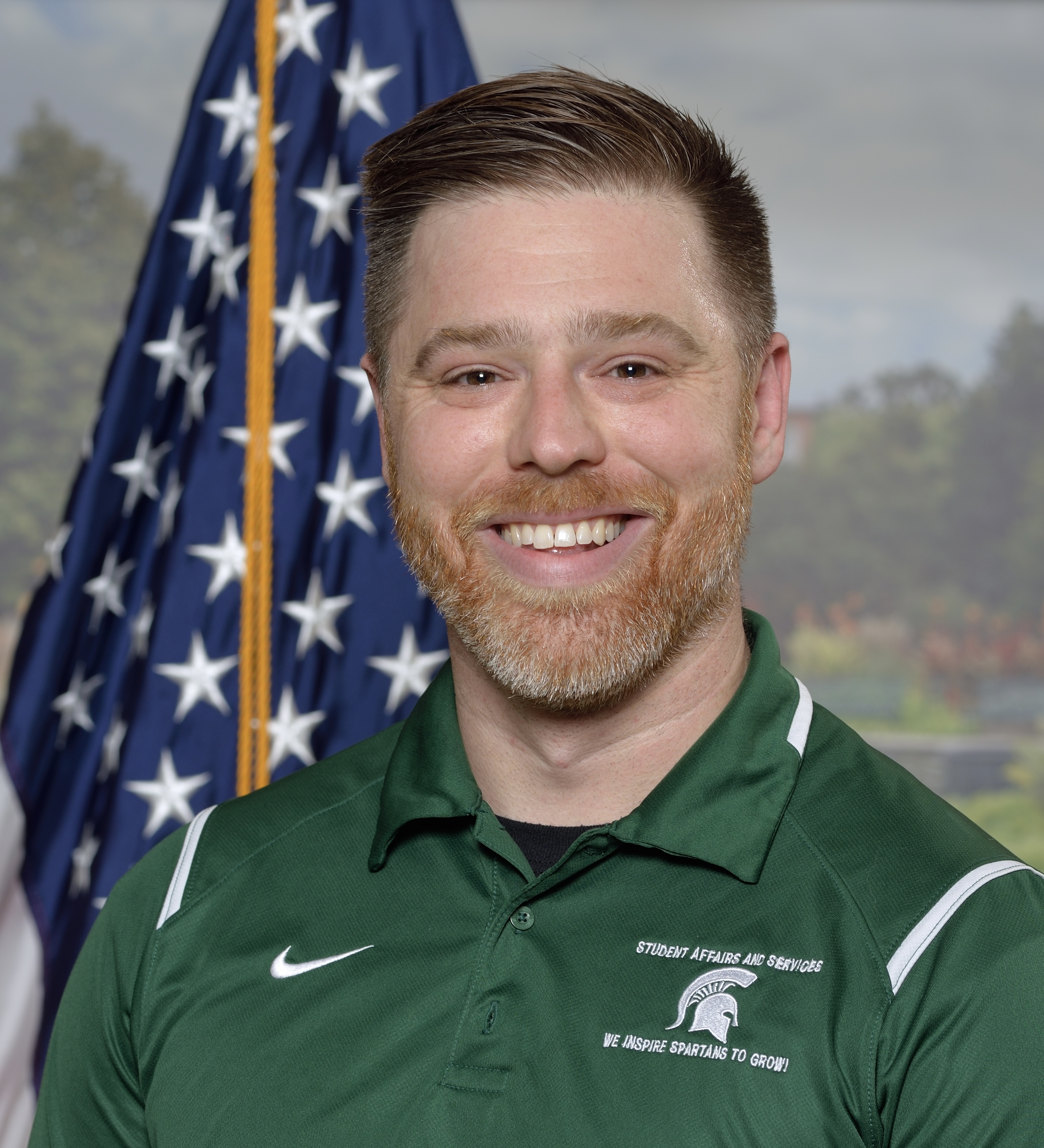
In this Partner Spotlight, PsychArmor’s Jamie Regalia sits down with Patrick Forystek, a Marine Corps Veteran and the Director of Michigan State University’s Center for Veterans & Military Affiliated Students (CVMAS). Together, they explore what it really takes to support military-connected students on a modern campus, why cultural competency must extend beyond benefits and compliance, and how training like 15 Things Veterans Want You to Know becomes a force multiplier across student life, faculty, and academic advising
A Personal Transition That Shaped a Mission
Let’s start with your own experience in the transition. What was your transition from the Marine Corps into college like? And how did these early experiences as a student Veteran shape the way you approach this work today?
Patrick Forystek:
“Absolutely. I had a fantastic transition. And I think that was the biggest impact on paying it forward. When I got out of the Marine Corps, I moved up to Los Angeles and worked for the city for a little while, and I quickly realized this isn’t for me. I want to go back home.
“I had been to college before, and I reached back out to the school I left to join the Marine Corps. The support I got was amazing. I got an email back within a day. Every question I could think of was answered. The person—her name was Sarah Melon—walked me through everything. She made it so simple.
“And it wasn’t just going back to school. It was moving across the country and going back to school. When I started there, I spent time in the Student Veterans Resource Center and got a job as a VA work study. I got to work with Sarah and learn from her over a couple years.
“She made my transition doable. And I got to see firsthand how much impact someone at a university can have on a transitioning service member—because even if the steps seem easy once you’ve done it for years, for a transitioning service member that’s scary. Especially if you have a family and you have to move. That’s a lot of responsibility.”
What Student Veterans Need Most When They Arrive
Were there moments in those early years that helped you see what Veterans really need from a campus community?
Patrick Forystek:
“Oh, absolutely. I was very motivated when I got there. I started working as a VA work study and walking others through what might seem like easy steps—but they’re complicated. They’re hard to find.
“Historically, the Department of Defense hasn’t done a great job preparing service members to transition back into school. So, I was able to use my experience to help with those hot topics: How do I get my benefits set up? When do I get paid? How much do I get paid? How do I navigate financial aid?
“Having gone through that, I was able to use my experience—and learn as I go, because the experience has changed since I transitioned in 2012—to see how we can best support them.”
Jamie Regalia:
Are there other areas you see military-connected students navigating most often when they first arrive on campus?
Patrick Forystek:
“At Michigan State, the biggest things revolve around registering for classes and finances. For Veterans, it’s a lot of navigating red tape, bureaucracy, and paperwork—making that as easy as possible so they can focus on registering for classes, getting to know their academic advisers, and spending time on what’s really important to their transition and growth.
“They’re going from a Marine, a Soldier, a Sailor, an Airman to a student. So we try to make it so the only thing they have to focus on is that student piece.”
The Biggest Misunderstanding: Student Veterans Are Not a Monolith
What do people sometimes misunderstand about student Veterans or military-affiliated students?
Patrick Forystek:
“The biggest thing—especially working with faculty and staff—is understanding the diversity of this population. Student Veterans are not a monolith. They represent the entire political spectrum. I have student Veterans who are international students. I have student Veterans born right down the road. I have an 18-year-old who joined the Guard and is a freshman. And our VP of the student Veteran organization was a 42-year-old retired first sergeant.
“It’s such a massively diverse population that you really can’t assume you know them. But understanding that, we try to provide training so staff can better navigate getting to know them.
“And I think what the training does really well is it starts that conversation piece.”
Patrick Forystek (continued):
“One of the most unexpected pieces of feedback I’ve gotten is that people who took the training are not only better able to interact with Veterans on campus—they’re better able to interact with Veterans in their own family.
“The first person I talked to after the training said, ‘Now I understand my father-in-law better.’ And I was like—cool. We’re doing more than we thought we were going to.”
What Was Missing Before Cultural Competency Training
Before you began implementing training like 15 Things Veterans Want You to Know, what did you notice or start to realize about what wasn’t working or what was missing?
Patrick Forystek:
“I’ve been doing this long enough that some of this stuff feels like everybody should know it. We went to war in 2001. It’s 2026. Everybody should know these things. But people don’t—and that’s okay.
“Society’s changed. There’s an old quote: ‘The Marines are at war, America’s at the mall.’ That hasn’t gotten any better.
“Before bringing in this training, what I saw was a real deficiency in understanding the culture, the needs, and the diversity of Veterans. Especially those currently serving. I’d have someone in the Guard who had to go to drill, and faculty would say, ‘Well, those aren’t orders.’ No—those are absolutely orders. They have to be there.
“There wasn’t a common narrative. If a Veteran misses a VA medical appointment, it could be two or three months before they can get back in. That’s a really big deal. And that part was missing.
“What I found is people were interested in learning. We just didn’t have a good way of getting that information out in a palatable, easy-to-understand way. PsychArmor changed that.”
Why 15 Things Became the Foundation
When you introduced 15 Things Veterans Want You to Know as part of your training foundation, what drew you to that course and what were you hoping it would do?
Patrick Forystek:
“The biggest thing was creating a base understanding of who our Veterans are—and understanding that it really is that broad.
“I used to do an activity where I’d say, ‘Close your eyes and picture a Veteran.’ And the joke was everyone is picturing the same person unless they have someone in their family. And that is not who we’re working with.
“15 Things did a really good job of boiling that down into a handful of talking points to give people tangible tools—to break what they thought a Veteran was, and meet those student Veterans where they are. It’s been phenomenally helpful for that.”
Training as a Force Multiplier Across Campus
Have you noticed shifts in awareness, conversations, or relationships among the campus partners you work with most closely?
Patrick Forystek:
“Definitely with campus partners. The training is great, and our office is getting it done, but the real work has been outside—with our partners.
“One of our first offices to be 100% completed is our Gender and Sexuality Campus Center. We’ve long been close partners with them. We’ve done book clubs because there are plenty of gay service members—of course they’re there. So how do we give these tools?
“As an office, we’ve always treated it like: we’re here to support you no matter what, even if you don’t need us. But our goal has never been to connect transitioning service members only to our office. We want them to find their other identities. Join engineering clubs. Work for the writing center if you’re an English major.
“So the ability to take training and put it in places where Veterans are going to connect—because they might not come into our center, but they will go to Gender and Sexuality, Multicultural Enrichment and Advocacy, Fraternity and Sorority Life—those are the places they’re going to dissipate to. We need those spaces to have base knowledge.”
Patrick Forystek (continued):
“It’s a no-wrong-door policy. I can’t be everywhere. Michigan State, like most public institutions, doesn’t have a lot of funding for these areas. So we need things that are a force multiplier.
“Faculty too—100%. If a Veteran isn’t going to the Vet Center because they feel like it’s like the USO and it’s not for them, we can still support them if the places they do go have that base understanding.”
What It Looks Like to Be a Veteran Ready University
It sounds like what you’re describing is a university that’s Veteran Ready in practice, not just on paper.
Patrick Forystek:
“Absolutely. We talk a lot in student support spaces about what the institution can do to be better prepared for students rather than making them change who they are. We need to change who we are to better fit them.
“This training has done a really good job helping spearhead that conversation. Yes, Veterans are going to grow and change—everybody should. But the university has a responsibility to be as welcoming as possible. And this training provides the groundwork and understanding for the people in other spaces to make that happen.”
The Classroom Advantage: Veterans as an Asset
For Veterans who spend most of their time in the classroom, what do you wish more faculty understood? What becomes possible once they do?
Patrick Forystek:
“I’ll go back to diversity, but on a smaller scale: Veterans are bringing a lot of experience. I hear a lot from Veterans: ‘Oh I’m so old.’ When you’re 24 or 25, you feel a lot older than a 19-year-old. But you’re often the same age as a lot of faculty or TAs.
“You’ve got someone in your class who has world experience—deployments, real experiences all over the world. That’s an asset in the classroom.
“Faculty who know how to utilize that—without putting a Veteran on the spot or outing them—can lean into those strengths. These are leaders in the classroom. Time management tends to be there. Leadership is there. And the training helps faculty and staff see the value in that and the value of having these students on campus.”
Growth Ahead: Building Momentum for Campus-Wide Readiness
Looking ahead, as CVMAS continues its journey toward becoming a Veteran Ready Organization, what are you most excited about?
Patrick Forystek:
“The growth of this program. We have 67–68 folks enrolled right now, with around 44–46 complete, and that’s about to balloon.
“We didn’t start adding people until October or November, so we’ve really only had a month or month and a half of work time. We’re about to add an entire major academic unit with about 140 employees—many of them academic advisers. I think we’re going to see exponential growth.
“I don’t think it flips a switch and suddenly we’re prepared everywhere, but the competency is going to grow. People in positions working with students daily will know how to ask questions and start conversations.
“At the end of the day, we’re not just here to get people through. We want students to learn and grow and we want to retain students. Advisers who understand the challenges Veterans face can recognize issues earlier and get ahead of them. Over time, I hope we see increased retention because students can go anywhere on campus and find a base understanding of what makes them unique—and get better advising and better support.”
Higher Education’s Next Step: Institutional Buy-In
Outside of MSU, what do you hear from other universities about the challenges of supporting military-connected students? Where does higher education need to go next?
Patrick Forystek:
“The biggest deficiency we see is buy-in from the institution. I don’t have a peer who isn’t doing the hardest work they possibly can. The difference becomes how the university is supporting that office.
“We need more support from institutions in serving this population. Over the last 15 years of the Post-9/11 GI Bill, we’ve seen that these students come to our schools and perform really well—even with barriers. About 50% are married. About 50% have children. About one in three have a service-connected disability. They’re returning adult learners with a lot on their plate, and they still perform near or above their traditional peers.
“Universities need to view this population as an asset. These students do well academically and come fully funded most of the time. How are you making your institution appealing so they want to come—and succeed?
“At Michigan State, this PsychArmor training and 15 Things Veterans Want You to Know is making such a splash that even talking about the training is getting legs. We’re seeing more buy-in from folks who haven’t done it yet because they see the value.”
Creating Veteran Ready Campuses Starts With People
To close us out, if you could leave one message for faculty, staff, advisers, classmates, or administrators about the role each of us can play in supporting Veterans on our campuses, what would it be?
Patrick Forystek:
“You never know where that Veteran is going to go looking for support. It may be my office. It may be their sociology professor. You don’t know where that person is going to find a home or identify.
“The biggest takeaway is to seek out training like this and be prepared. If a Veteran decides you’re the person they’re going to confide in, you want to have a base understanding of how to meet those needs. The training is out there, and it’s really valuable.”
A Campus Culture That Meets Veterans Where They Are
Michigan State University’s approach shows what it means to build a truly Veteran Ready campus: not just by mastering benefits and compliance, but by creating a shared cultural understanding across the entire institution. When training reaches academic advisers, student life staff, faculty, and campus centers, support becomes easier to access, more consistent, and far more likely to impact outcomes like belonging, retention, and long-term success.
Jamie Regalia:
“Patrick, thank you for sharing your experience and the incredible work you’re leading at Michigan State University. Your leadership is helping redefine what Veteran support can look like across campus—so student Veterans can find understanding and support wherever they land.”
How You Can Support the Next Chapter of 15 Things Veterans Want You to Know
Join the 15 for 15 Challenge
Conversations like this show what happens when cultural understanding becomes part of everyday systems and interactions. When faculty, staff, and campus partners have the tools to recognize and support military-connected students, Veterans are more likely to feel understood, persist through challenges, and thrive.
As we honor the 10-year legacy of this flagship course, we invite you to join us in the 15 for 15 Challenge.
You can make an immediate impact by:
• Watching the course
• Sharing it with your network
• Donating to keep this training free for individual learners
👉 Join the challenge and give today: https://giving.psycharmor.org/page/FUNQSPZZJAQ